
Race week guide
HYROX Race Day Checklist: The 48 Hours Before You Race
By 48 hours out, the training is done. Nothing you do in the final two days makes you fitter — but plenty can make you slower: a heavy dinner at 10pm, a short night you didn't need to have, twenty minutes lost hunting for the check-in desk. This is the countdown I follow myself, and the one RoxDuo builds race week around.
48 hours out: eat, sleep, pack
Start the carb shift
You don't carb-load in one heroic pasta dinner — you shift the balance of your plate across the final day and a half. From two days out, make every meal carb-forward: rice, pasta, potatoes, bread, with lean protein alongside. Ease off fat, fibre, and anything fried; they slow digestion and crowd out the carbs you actually want. Skip alcohol entirely until the finish line — it wrecks sleep quality and hydration, the two things this window is for.
The night before, aim for a dinner of roughly 3–4 g of carbs per kg bodyweight, finished by about 8pm. Familiar formats only — race week is not the moment for culinary adventures. Racing away from home? The city travel guides cover where to carb-load in every major host city, from Roman pasta to Amsterdam pancake houses.
Bank sleep two nights out
The night that matters most is two nights before the race. Almost everyone sleeps badly the final night — nerves, an early alarm, an unfamiliar bed — and one restless night before a morning race costs you very little if you slept properly the night before it. So protect the T-48 night: normal training-day evening, dark room, phone away, full eight hours if you can get them.
Pack the bag — and check it off
Kit checklist · pack it 48h out, not race morning
- Race shoes — the trained-in pair, plus the socks you always run in
- Race kit — dress lighter than you think; venues run warm
- Registration — ticket or confirmation, photo ID, and your bib if it was posted
- Watch, charged — plus the charger in the bag, because you will forget otherwise
- Water bottle and breakfast backup — oats or bread and a banana, in case the hotel breakfast opens after your wake-up
- Optional grips or gloves — only if you trained with them
- Warm layer and dry shirt for immediately after the finish
If the event offers race-pack pickup the day before, take it — it converts race-morning queue time into a calm walk-through of the venue while your heart rate is low.
Hydrate like it's boring
There is no last-minute hydration trick, only steady intake: keep water within reach through both final days and let urine colour — pale, not clear — be the gauge. If you sweat heavily or the venue runs hot, add electrolytes to some of that water rather than chugging plain litres at the end. Front-load the drinking to daytime so you are not up three times the night before your alarm.
The night before: make it quiet
Dinner done by 8pm, kit checked one final time and stacked by the door, two alarms set, phone on charge across the room. Then stop: no results browsing, no last YouTube technique deep-dive — you will not learn a new sled push tonight, and you can't cram fitness. Legs up, something undemanding on the screen, lights out at your normal time. A short night here is survivable; a frantic one is self-inflicted.
Race morning: the timeline
Work backwards from your wave time. The whole morning is six moves:
Race morning · timeline to your wave
| When | What |
|---|---|
| 3h 15m before | Wake up. No snooze — the 15-minute buffer is for coffee and getting your body moving, not for lying in the dark doing race maths. |
| 3h before | Breakfast: 1–2 g of carbs per kg bodyweight, all familiar — oats, white bread with jam and honey, a banana. Nothing you haven't eaten before a hard session. |
| 90 min before | Arrive at the venue. Check in, collect your chip, drop your bag, join the toilet queue once now rather than twice later. |
| 60 min before | Walk the floor: every station entrance, your Roxzone route, where the sleds and wall ball targets are. Caffeine (3–6 mg/kg) in this window if — and only if — you use it in training. |
| 25 min before | Warm-up: 10 minutes of easy jogging, a few strides, one or two light efforts on free equipment if you can get it. You are warming up for run 1, not a max lift. |
| 10 min before | Into the corral. Sips of water only from here. Breathe — the plan is made, your only job now is run 1 at compartment pace. |
These are the defaults RoxDuo's race-week plans schedule around — shift everything with your wave time, keep the gaps the same.
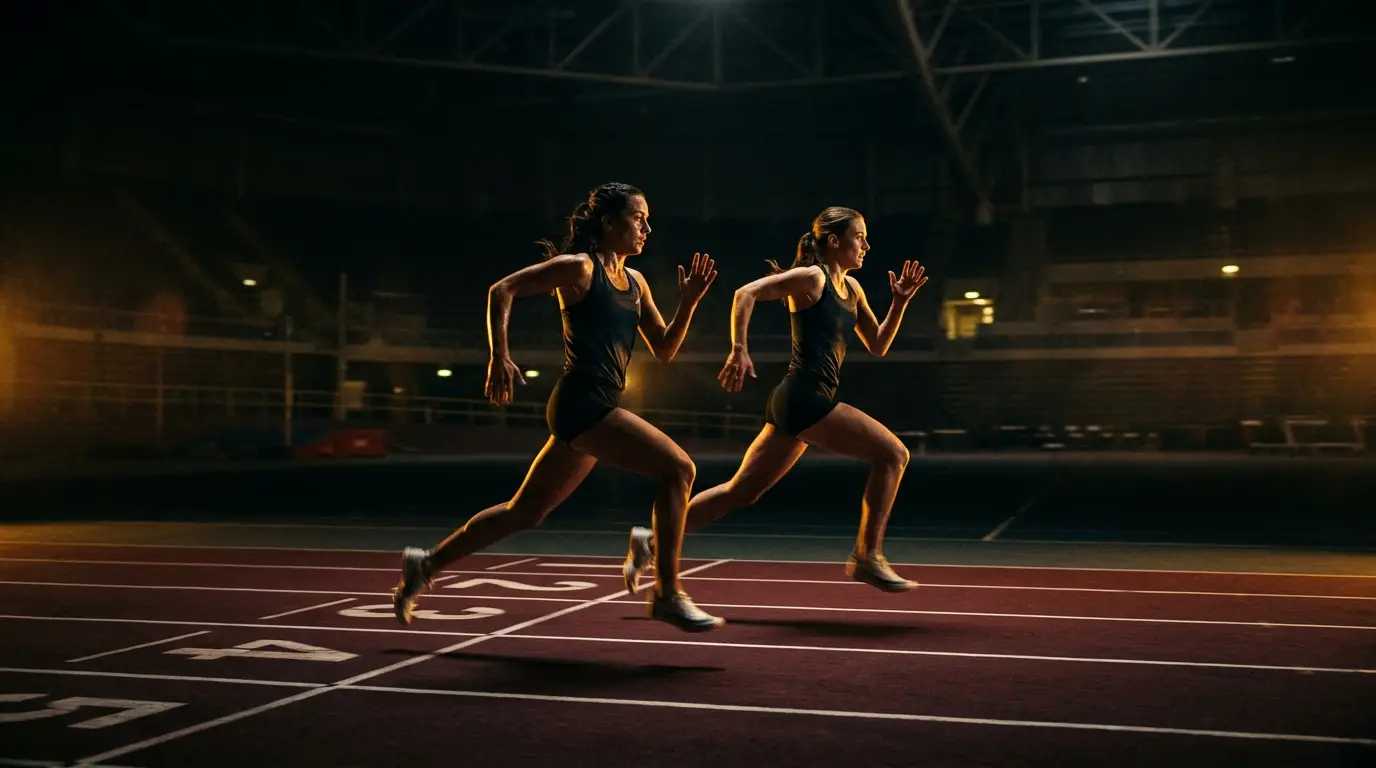
Coach's cue
Compartment pace, not 5k pace — leave every run able to work the next station. The most expensive mistake available on race morning is free: racing run 1. The race starts at the sleds; hold back now and collect the time later.
What to bring vs what's provided
Here is the fact that shortens every packing list: you bring nothing to the stations. Every sled, every kettlebell, the sandbag, the wall balls, the SkiErg and the rower are standardised and waiting at the venue — that standardisation is the whole premise of the sport. Your kit list is what's on your body plus what's in the bag above, and the bag goes into bag drop before you start.
What you also don't need: lifting belts, straps, or specialist kit — the race is deliberately low-equipment. What is worth knowing by heart instead is what's waiting for you: the loads for your division. They're all in the weights & standards reference — read your division's row once more on the train to the venue, then stop thinking about it.
Roxzone strategy: the ninth station
The Roxzone — the transition area between runs and stations — takes roughly 7% of a typical race clock. For a 1:30 finisher that is about 6:18 of race time, and unlike the sleds, most of it is negotiable. The plan:
- Walk it before your wave. Know every station entrance and the route between them. Athletes lose whole minutes on race day simply navigating.
- Jog the transitions. Not sprint, never walk. A controlled jog through every transition is worth a minute or more over eight of them, at almost no physiological cost.
- Decide in advance where you drink — pick your moments rather than grabbing water on impulse at every pass.
- Rehearse the entries. Ten seconds of standing still deciding how to grip the rope is ten seconds the clock keeps. You planned this at home; execute it.
Want your own Roxzone budget in numbers? The race time calculator splits any goal time into run pace, station targets, and a transition allowance.
Doubles: sync the pair
Everything above applies to both athletes. Doubles adds one job: arrive with the race already decided.
- The split is agreed before race week ends — every station, every swap point, who works first at each. Mid-race negotiation is how pairs blow up; if it isn't written down, it isn't a plan. (This is exactly what the Team Sheet in the RoxDuo app produces from both partners' PBs.)
- Travel and arrive together. One timeline, one bag check, one warm-up — a pair that warms up separately starts the race on two different heart rates.
- Rehearse the handovers one last time in the warm-up area if equipment is free: a clean erg swap keeps the flywheel alive; a sloppy one gives seconds back on every exchange.
- Pre-plan the wall ball sets — the last station is shared no matter your strength profiles, in fixed alternating sets you agreed on days ago, not improvised at rep 60 of 100.
New to the format? The doubles guide covers rules and split strategy in full.
After the finish line
- Eat within the hour — carbs plus protein, and now the celebration meal is not just allowed, it's the protocol.
- Keep walking. Ten easy minutes on your feet beats collapsing into a chair; your legs will thank you tomorrow.
- Log the race while it's fresh: station splits, what the plan got right, where time leaked. That data is the honest starting point of the next training block.
- Book the next one. The post-race window is when motivation is highest — the 2026/27 calendar has every date. And if this was your first event, the beginner guide has the 12-week outline to build on properly next time.
Arrive with a plan, not a hope
RoxDuo builds your entire race week — taper sessions, fuel timeline, and this countdown — backwards from the race you pick, with station targets set from your actual PBs. Built by Filippo Terzi, an athlete training for HYROX Rome 2026 on his own app.
Get launch accessFAQ
What shoes should I wear for HYROX?
A firm, stable trainer with a grippy outsole — enough cushion for 8 km of running, enough platform for the sled lanes. Soft maximal marathon foam gets unstable under a loaded sled, and flat lifting shoes make 8 × 1 km miserable. Race in a pair you have already trained the full station circuit in, never a box-fresh one.
Should I eat during a HYROX race?
Most athletes racing between one and two hours need nothing beyond fluids — race on the carbs you banked the night before and at breakfast. If you expect to be out well past 90 minutes and you have practised it in training, a gel around the halfway point is reasonable. Nothing you swallow mid-race should be a first attempt.
How early should I arrive on race day?
Be at the venue at least 90 minutes before your wave. Check-in, chip pickup, bag drop, toilet queues, and finding your corral at a big event swallow an hour without trying — and you still want time to walk the floor and warm up unhurried.
Are grips or gloves allowed in HYROX?
Yes — thin grips or gloves are fine, and some athletes like them for the sled pull rope and farmers carry handles. Bare hands work perfectly well too. Whatever you choose, race with what you trained with; new kit on race day is how blisters and fumbled ropes happen.
Launch access
Start together.
Finish together.
The AI training app for HYROX doubles. Be first when it hits the App Store — 3-day free trial at launch.